(914) 325-8464


Why Women’s Sleep Is Different — and What Actually Helps
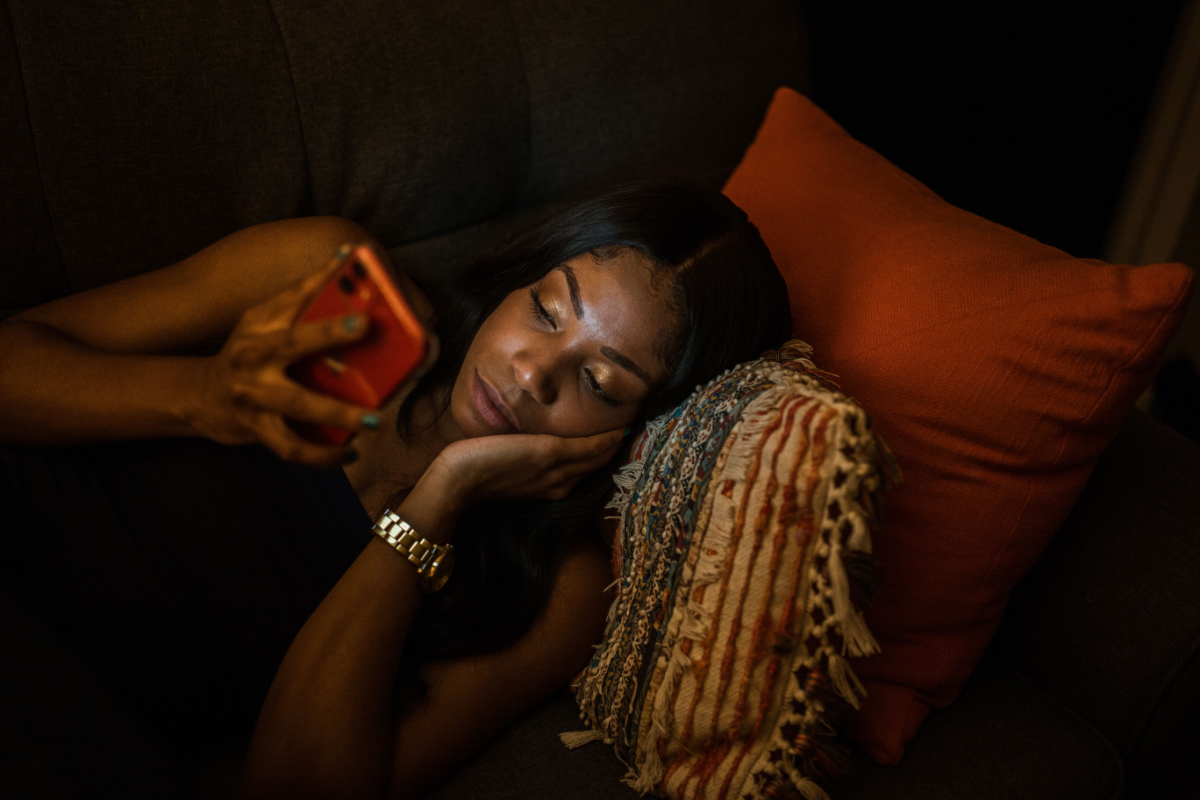
By Dr. Shelby Harris, PsyD, DBSM · Board-Certified in Behavioral Sleep MedicineYou’re the one who’s up. Your partner fell asleep mid-sentence and hasn’t moved since. Meanwhile you’ve been awake since 3:15 — running through tomorrow, replaying today, listening to the house — and at some point you started doing the math on how much sleep is still possible if you fall asleep right now.
If that sounds familiar, you’re in very large company. Women are meaningfully more likely than men to develop insomnia, and the gap shows up early — around the start of puberty — and stays open through every stage of life after it. That isn’t a coincidence, and it isn’t a character flaw. There are real reasons women’s sleep runs differently, and once you can see them, the whole thing stops feeling like a personal failing and starts looking like something you can actually do something about.
It isn’t in your head, and it isn’t just hormones
When I explain this to patients, I call it the trifecta, because it’s three things at once and they tend to stack rather than take turns:
Hormones. The two main female hormones, estrogen and progesterone, shift across the month and across a lifetime, and both of them have a hand in sleep. When they swing, sleep often swings with them.
Mood. Anxiety and low mood run higher in women, and sleep and mood are a two-way street — bad nights rough up the day, and a rough day makes the next night harder.
Everything on your plate. The social load. The mental list that never fully closes, the caregiving in both directions, the fact that bedtime is often the first moment all day that nobody needs anything from you — and that’s exactly when your mind decides to get to work.
Any one of these can nudge sleep off course. When two or three line up — which, for many women, they do — a rough patch has a lot of help turning into a pattern.
Let me take them one at a time, starting with the one everyone blames.
The hormone piece, in plain language
Estrogen does a lot of jobs, and one of the quieter ones is helping you fall asleep and stay asleep. Progesterone, its partner, has a naturally calming, almost sedating quality — it boosts the brain’s own settling-down chemistry. When progesterone is up, sleep tends to come more easily. When it drops, many women notice lighter sleep, more waking, and more early-morning alertness they didn’t ask for.
Here’s the part that surprises people: women actually tend to get more deep sleep than men. The problem isn’t the quality of the sleep women can get. It’s how often the hormonal weather interrupts it. And that weather changes at several predictable points.

The days before a period
Some women can set a calendar by it. In the run-up to a period, both hormones drop sharply, and the few days before and around the start of bleeding are often the roughest for sleep and mood together. Once hormones begin to rise again, sleep tends to level out.
When I have younger patients track their sleep, the monthly rhythm is often sitting right there in the diary.
Pregnancy
Pregnancy disrupts sleep for most women at some point, and it’s seldom one thing. Early on, the surge in progesterone can make you profoundly sleepy during the day while nausea, trips to the bathroom, and back discomfort break up the night. The middle stretch is often the best. Then the final months bring their own set of interruptions — heartburn, leg cramps, a bladder under pressure, vivid dreams, and a fair amount of understandable anticipation. A lot of that is the body doing exactly what it should. It’s still exhausting.
After the baby
This is the stage I hear about most often in my office, sometimes years after the fact: my sleep was fine until I had my first child, and it never came back.
Some of that is obvious — a newborn has no body clock yet and needs you every few hours. But there’s a subtler piece. New mothers tend to sleep with one ear open. Even once the baby sleeps through, a small part of the brain keeps the night watch, and deep, restorative sleep is harder to reach because you’re never fully off duty. The baby grows up. The night watch doesn’t necessarily get the memo. That’s how a perfectly reasonable adaptation can quietly become a habit the brain holds onto long after it’s needed.
Perimenopause
The years leading up to menopause — often several of them, sometimes closer to a decade — are the stage where women’s sleep tends to take its biggest hit, and it’s the one I’m asked about most. Hormones don’t just decline here; they swing, sometimes wildly. Hot flashes and night sweats wake you. Falling progesterone takes its calming influence with it. And many women describe a particular kind of waking — 3 a.m., no flash, just a brain that’s suddenly, completely on.
Perimenopause deserves its own article, so I’ve written one: Perimenopause and Insomnia: Why It Happens and What Helps. The short version is that the hormones open the door, but they’re often not what keeps it open.
After menopause
For many women, the hormonal turbulence settles once periods have stopped for good — hot flashes ease, the swings flatten out, and sleep often improves with them. Two things worth knowing about this stage: the risk of breathing-related sleep problems rises noticeably after menopause, and other things that fragment sleep — pain, medications, the loss of a daily routine after retirement — tend to accumulate. So if sleep gets worse rather than better here, it’s worth a closer look rather than a shrug.
The second leg: sleep and mood travel together
Anxiety and low mood show up more often in women than in men, and they don’t stay in their lane. Worry raises your arousal exactly when it needs to drop. Low mood tends to pull sleep apart — earlier waking, lighter sleep, less of it. And the traffic runs both ways: string together enough bad nights and your mood has less to work with the next day, which makes the next night harder still.
I’m not saying insomnia is “really” anxiety, or that treating one automatically fixes the other. I’m saying they tend to arrive together in women, and a plan that ignores one of them is often a plan that only half works.

The third leg: everything on your plate
Then there’s the load — and I’d argue it’s the piece most often left out of the conversation.
For many women, the day doesn’t have a quiet moment in it. Work, kids, a partner, parents who need more than they used to, the running inventory of who needs what by when. Bedtime is the first point in the whole day when nothing is being asked of you — and into that silence rushes everything your mind didn’t have room for earlier. It can feel like every tab in your brain is open at once and it chose the worst possible moment to go through them. But it didn’t choose the worst moment, exactly. It took the only slot you gave it.
There’s a version of this I see constantly: the evening finally goes quiet, everyone else is asleep, and this is y o u r time — so you stay up for it. An episode becomes three. You doze on the couch, wake at midnight, move to bed, and now you’re wide awake. It’s completely understandable. It’s also, night after night, teaching your body a schedule you didn’t mean to teach it.
And the load often includes other people’s sleep. A partner who snores like a freight train and insists he doesn’t. A toddler who arrives at 2 a.m. A teenager whose Saturday night you’re waiting up for. An aging parent who’s up and calling for you. None of those are insomnia. All of them can start it.
Why women get brushed off — and why that matters
Put those three pieces together and you get the thing I hear most from women in my office: I was told it’s just hormones. Or just stress. Or just this stage of life. And then handed a prescription — or nothing at all.
Here’s my problem with “just hormones. ” It’s half right, and the half that’s wrong is the half that keeps you stuck.
Hormonal changes are often what starts a stretch of bad sleep. But what keeps it going is often something else entirely — and it’s the same machinery whether you’re 28 or 58. After enough nights awake and frustrated, your brain quietly re-labels the bed as a place where you stay alert. You start giving sleep more room — earlier to bed, later up — which spreads it thinner. You start working at it: monitoring, calculating, bracing for tomorrow. And sleep is one of the few things in life that retreats the harder you chase it.
So the hot flashes fade, or the baby finally sleeps, or the period passes — and the insomnia is still there, because by then it’s running on its own. That’s not a hormone problem anymore. It’s a learned pattern. And the reason that matters is that learned patterns are treatable, regardless of what set them off.
Which is why I say this to nearly everyone: don’t let yourself get brushed off. “It’s your age” is not a treatment plan.
What actually helps
The treatment aimed at insomnia itself is CBT-I — cognitive behavioral therapy for insomnia. It’s a short, structured program that retrains what your brain has learned about your bed, matches your time in bed to the sleep you’re actually getting, and takes the effort out of the whole enterprise. Both the American College of Physicians and the American Academy of Sleep Medicine recommend it as the first-line treatment for insomnia — before medication, not after.
Two things I want women in particular to hear about it.
First, it works at every stage. I’ve used it with women trying to conceive, women who are pregnant or nursing and don’t want to take anything, women in the thick of perimenopause, and women decades past it. It doesn’t require your hormones to settledown first. It works on the part of the problem that hormones don’t explain — the part that keeps insomnia going.
Second, it isn’t either/or. If night sweats are wrecking your nights, a conversation with your gynecologist about your options is a completely reasonable parallel track, and I’ll often encourage it. But the insomnia still needs its own treatment. Treating the flashes without treating the pattern tends to leave you with quieter nights you still can’t sleep through.
It’s also the core of how I work with insomnia patients, and it’s the backbone of the book I wrote for exactly this reader.
When it’s worth a closer look
A few situations deserve their own attention, because they’re not insomnia and they don’t respond to insomnia treatment.
If you snore loudly, wake gasping, or your partner has noticed pauses in your breathing — and especially if that’s newer since menopause or during pregnancy — that’s worth raising with a physician. It’s a breathing issue, not a sleep-habit issue, and it has its own path. If what keeps you awake is your legs — a restless, crawly, have-to-move feeling that eases when you get up — mention that too; it’s common in pregnancy and has its own treatment. And if the low mood that comes with bad nights is following you through the day, especially in the months after a baby, that deserves attention in its own right, not just as a sleep symptom.
None of that is a reason for alarm. It’s a reason to make sure you’re treating the right thing.
The bottom line
Women’s sleep runs differently because women’s lives and bodies do. Hormones shift on a schedule men never deal with. Mood and sleep pull on each other. And the load — the open tabs, the night watch, the couch that turns into midnight — lands hardest on the person who’s already the last one asleep.
But the thing that makes insomnia stick is the same for everyone, and it’s learnable, which means it’s unlearnable. Give the basics an honest two to three weeks — the earlier wind- down, getting up instead of lying there, the clock out of sight, the couch retired as a bedroom. If you’re not seeing results, I’d recommend seeing a physician or a behavioral sleep specialist, because at that point the answer is often treatment, not more effort.
You’re not bad at sleeping, and it isn’t just hormones. Don’t let anyone tell you it is.